
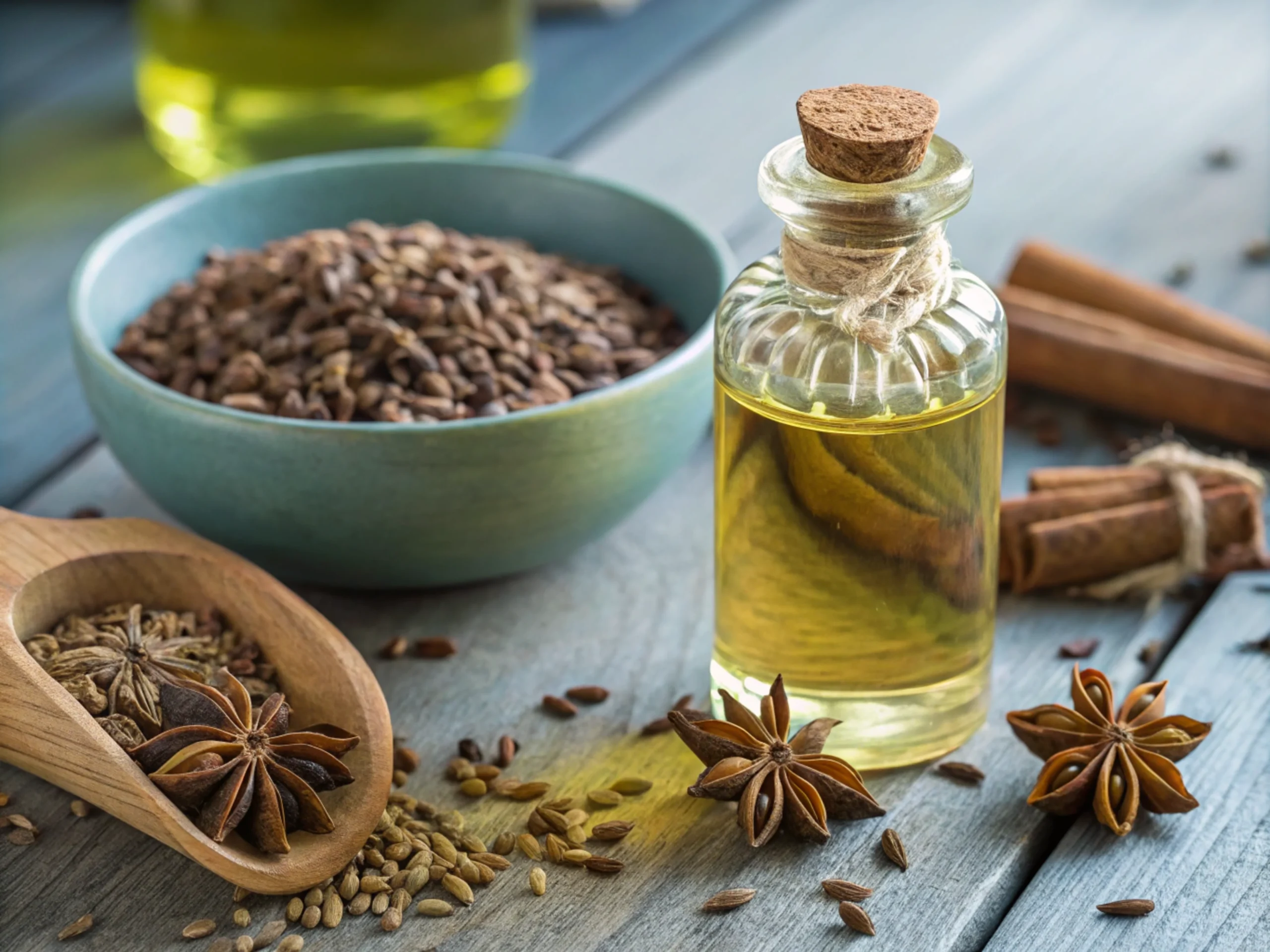
What Does Anise Oil Smell Like?
Anise oil smells sweet, sharp, herbal, and similar to licorice or fennel. The scent is concentrated, which is why recipes usually call for drops instead of spoonfuls.
Common Kitchen Uses
- Flavoring hard candy or lollipops
- Adding licorice notes to cookies and biscotti
- Scenting syrups for drinks or desserts
- Adding a tiny aromatic note to marinades
- Making homemade extracts when diluted correctly
How Much to Use
Start with 1 to 2 drops for a small batch, then taste before adding more. Too much anise oil can quickly overpower a recipe. Make sure the product is labeled food-grade before using it in cooking.
Safety Notes
Do not use essential oils in food unless they are clearly labeled food-grade and suitable for culinary use. Keep concentrated oils away from children and pets, and avoid direct skin contact unless the product instructions say otherwise.
Storage
Store anise oil tightly closed in a cool, dark place away from heat and sunlight. Wipe the bottle after use and discard it if the aroma turns stale or unpleasant.
Nutrition note: This article is for general food education only and is not medical advice. Ask a qualified professional before using concentrated oils for health-related purposes.
Anise Oil vs. Anise Extract
| Ingredient | Strength |
| Anise oil | Very concentrated; use drops |
| Anise extract | Diluted; usually measured by teaspoon |
| Ground anise seed | Milder and textured |
Substitutions
If you do not have anise oil, use anise extract, ground anise seed, fennel seed, or a small amount of licorice flavoring. Adjust gradually because each option has a different strength.
2 thoughts on “Anise Oil: Uses, Benefits, and Why Fish Love It”